
Every player remembers a coach. Sometimes it's for what they taught them about the game. Other times, it's for the confidence they gave them, the way they made them feel or the belief they had in them.
For Joe, one coach in particular helped shape his love of sport. Now, he's hoping to pass those same lessons on to the next generation of baseball coaches.
Joe didn't grow up playing baseball. His sporting background was in rugby, where he experienced firsthand the influence a good coach can have.
It wasn't necessarily about winning games or developing the best players. It was about creating an environment where everyone felt valued, where players were treated as equals and where everyone had the opportunity to enjoy being part of a team.
That experience stayed with him.
Today, Joe is helping deliver coaching education across multiple sports, sharing his knowledge and experience with people who are often taking their very first steps into coaching. And while the technical side of the game is important, it's the person behind the coach that he believes makes the biggest difference.
"Everyone has a different way of coaching. You've got to find what works for you and put your own personality into it," Joe said.
Everyone has a different starting point
There is no single pathway into coaching.
For some, it starts with years of playing experience and a desire to give back to the sport. For others, it's simply putting their hand up when a club needs another volunteer.
Sometimes, it's a parent dropping their child off at training one afternoon and finding themselves with a clipboard in their hand the next.
Joe knows that first step can be daunting, particularly for people who might have little experience or feel they don't know enough about the game.
His own coaching journey started through an opportunity in rugby league, helping with community activities before developing an interest in junior coaching.
What kept him involved was a passion for helping people grow.
"I just love the development side of it. Helping nurture young people to try and achieve things they don't think they can achieve," he said.
That same passion now drives his work with coaches, helping them develop the confidence and skills to create positive experiences for their players.
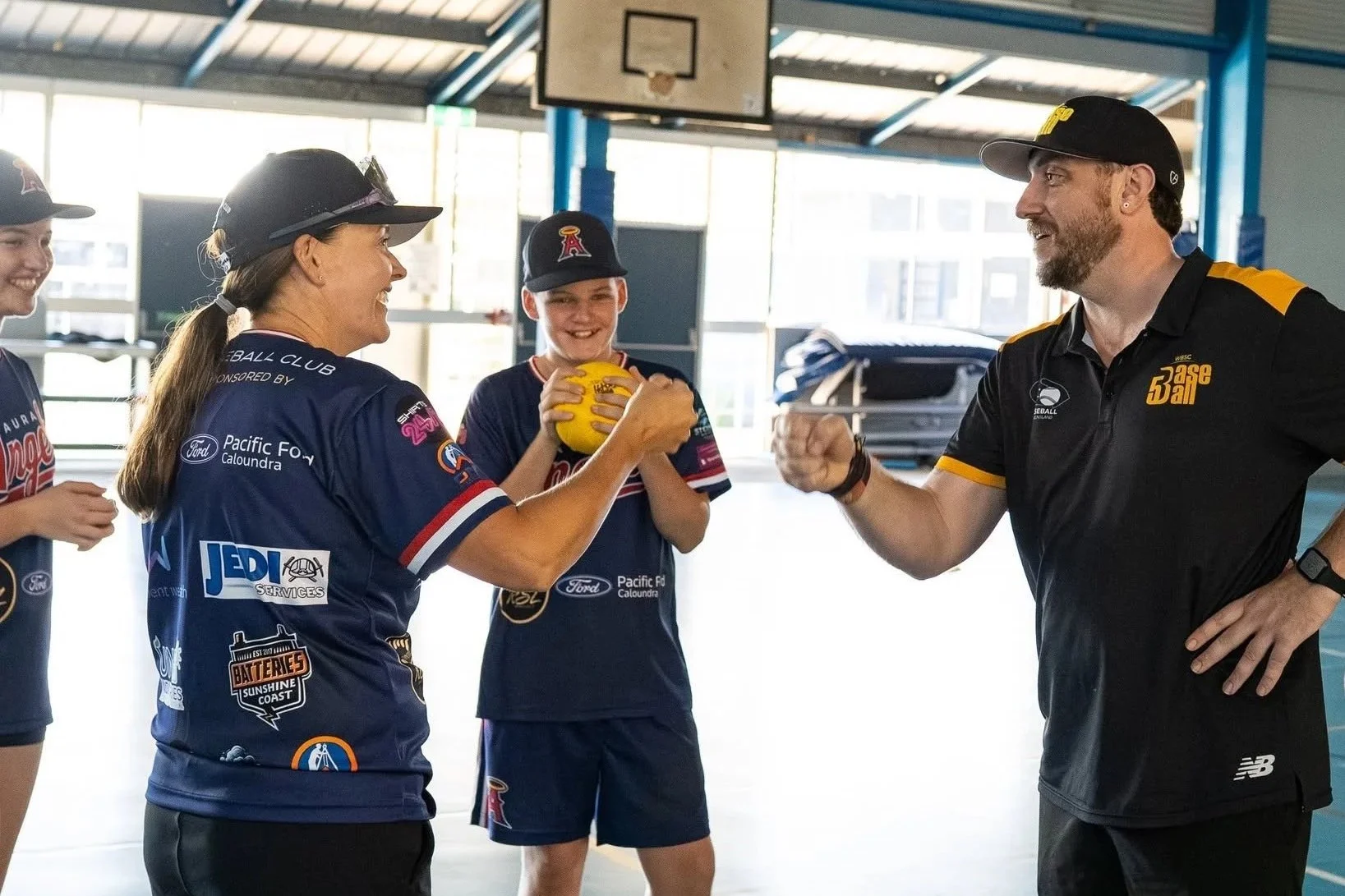
At a recent coaching course on the Sunshine Coast, Joe was reminded just how diverse that coaching community can be.
The group included experienced baseball people, parents who were new to the sport, club representatives and young coaches aged just 15 and 16.
Different ages, different backgrounds and different levels of knowledge, but all there for the same reason: to become better coaches.
You don't have to be a Joe coach
One of Joe's biggest messages is that coaching isn't about copying someone else's style.
It's easy to look at an experienced coach or mentor and try to replicate what they do. But what works for one person won't necessarily work for another.
Joe encourages coaches to take the lessons that resonate with them, learn from the people around them and find a way to make those lessons their own.
"I've absolutely stolen a lot of stuff from my mentors, but I've put my own spin on it," he said.
"It needs to be your version of what you've learnt. That's how players buy in."
For Joe, authenticity is key. Players recognise when a coach is genuine, when they believe in what they're teaching and when their actions match their words.
And sometimes, the most important coaching skill isn't technical knowledge at all.
"It's your personality that shines through as a coach. An engaged child will learn more in 10 minutes of being engaged than they will in 60 minutes of not being engaged."
It's a simple message, but an important one. Coaches don't need to have the loudest voice, the most experience or the perfect answer to every question. They need to find ways to connect with their players and make them want to come back.
Creating confidence, one coach at a time
That's why Joe finds these coaching courses are about more than just learning drills and understanding the fundamentals of baseball.
They're about giving people the confidence to have a go.
Rather than spending hours sitting through presentations, participants are encouraged to get involved, try activities and learn from each other.
At the Sunshine Coast course, a simple icebreaker involving balancing cups on their heads quickly had the group moving, laughing and getting competitive.
It might sound like a small activity, but it demonstrated exactly what Joe hopes coaches will take away: keeping things simple, getting everyone involved and creating an environment where people feel comfortable.
The course also gave participants the chance to step forward and lead activities themselves. Watching younger coaches confidently deliver games, or first-time coaches discover they had more to offer than they initially thought, was one of the highlights.
"It's cool when someone comes up and asks, 'Could I do this? Can I try this?' Absolutely. This is the best place to try it," Joe said.
It's also an opportunity to learn from the people around you. Every coach brings something different to the table, and those different perspectives can be just as valuable as the formal course content.
The ripple effect of a good coach
With baseball continuing to grow on the Sunshine Coast and new opportunities emerging across the region, developing a strong network of confident, educated coaches will be important.
For Joe, investing in coaches early can have a lasting impact on the sport.
More confident coaches mean better training environments, stronger connections with players and families, and ultimately, more enjoyable experiences for children.
"We have a big void in educated coaches because it's very much a volunteer role," he said.
"If we have educated coaches from the get-go, not only will the kids have more fun and be more engaged and understand the sport better, but the product and the sport overall will be better."
It's also about supporting the volunteers who are already giving so much of their time. The more people equipped to coach, the less pressure there is on a handful of volunteers to juggle multiple teams and responsibilities.
But perhaps the most important lesson Joe hopes to pass on has little to do with the technical side of baseball.
It's the lesson he learnt growing up playing rugby: make people feel valued, treat everyone equally and give them a reason to love being part of sport.
Because coaches might be the ones teaching the skills, running the drills and preparing teams for game day, but their influence often extends much further than the field.
And while every coach will bring their own personality, experiences and approach, they all have the opportunity to make a difference.
Interested in becoming a baseball coach?
You don't need to be an experienced player or know everything about baseball to get started. Baseball Queensland offers coaching education and resources to help new and existing coaches build their confidence and develop their skills.
Get in touch with your local baseball club or Baseball Queensland to find out about upcoming coaching courses. The Junior Coaching Handbook is also available in print and digital formats to support coaches along the way.